
Just as °Brix measures the health of the plant, electrical conductivity (EC) measures the current and biological activity in the soil.
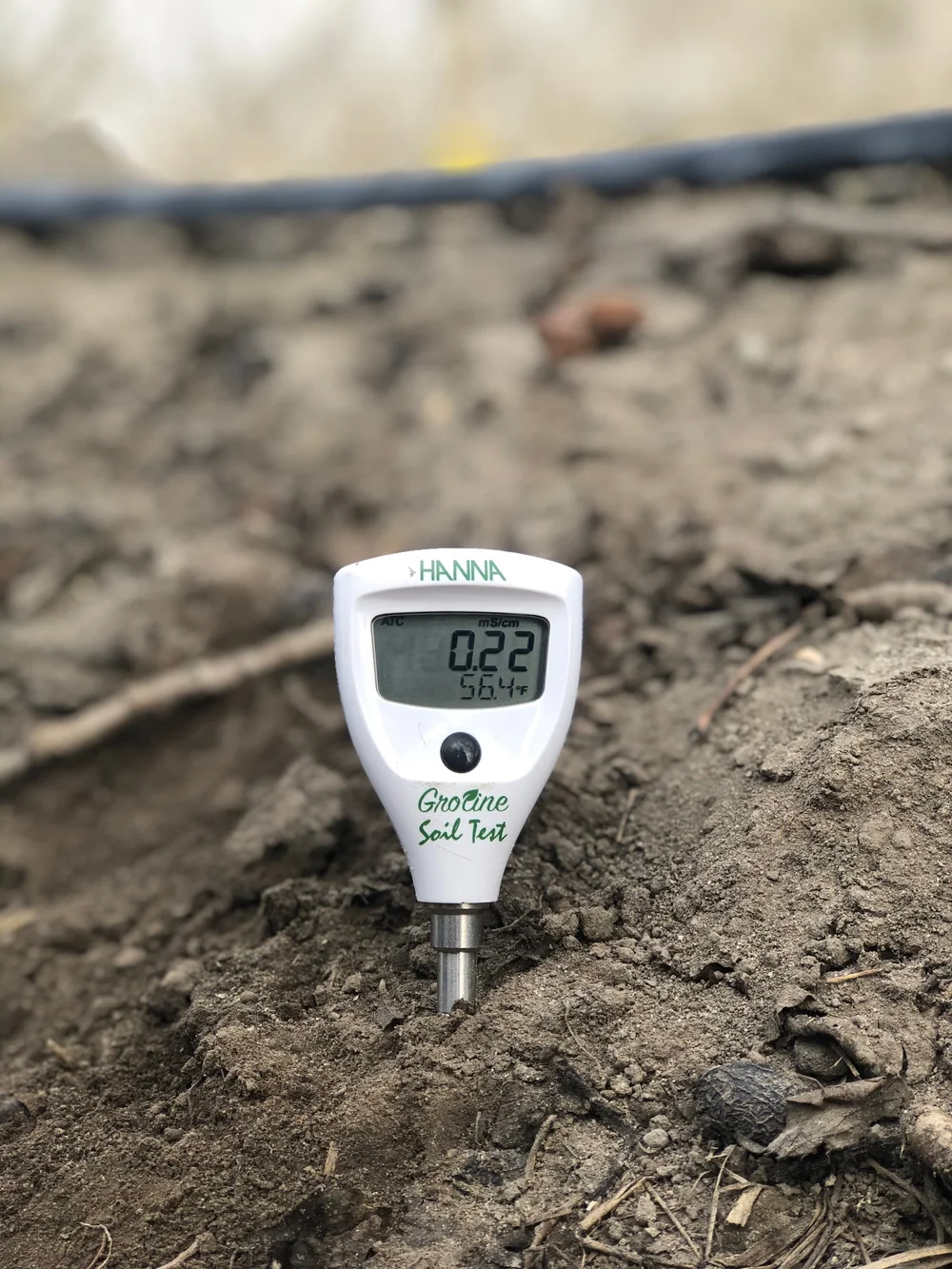
Using an EC meter to measure ergs (energy released per gram per second), we can monitor the interactions between minerals and microbes in the soil.
Urth takes regular EC readings on the crops we treat as part of our data collection.
You cannot build high °Brix with low EC.
| Soil type | EC (ergs) | EC (mS) |
|---|---|---|
| Sand | 100–200 | 0.1–0.2 |
| Silty loam | 150–300 | 0.15–0.3 |
| Clay | 200–400 | 0.2–0.4 |
| Soil type | EC (ergs) | EC (mS) |
|---|---|---|
| Sand | 200–400 | 0.2–0.4 |
| Silty loam | 500–700 | 0.5–0.7 |
| Clay | 600–900 | 0.6–0.9 |
Well-fed soil microbes rapidly reproduce, grow, eat, breathe and die. Through that life cycle they release solutes and ions into the root zone. The life and death of soil microbes is a major contributor to soil EC, and it drives plant growth.
Many common industrial products contain inactive salts that raise EC temporarily. When that energy is used up, EC drops, and that’s often when disease and insect pressure sets in.
As soil managers, our influence is either positive or negative. You can monitor EC and make accurate input recommendations from it, or ride the highs and lows of chemical farming. For optimal biological activity, hold your soil’s EC in these ranges through the season.